← Home
中文 English

Smart Materials Design Research Group

Team Members and Academic Profiles

Members

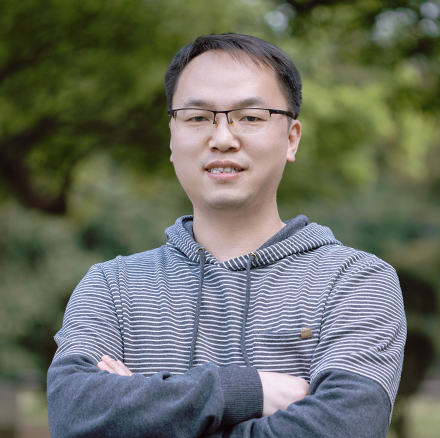
Gang Zhang

Curriculum Vitae

Gang Zhang

Chair Professor at Beijing Institute of Technology and Honorary Professor at the University of Wollongong, Australia. He received his B.S. degree in Physics from Tsinghua University in 1998 and his Ph.D. in Condensed Matter Physics from Tsinghua University in 2002.

Research focuses on artificial intelligence for materials science, renewable-energy nanotechnology, nanoscale thermal management, two-dimensional materials, and advanced simulation tools.

Education

Ph.D.: July 2002

Condensed Matter Physics (First Class Honours)

Department of Physics and Center for Advanced Study, Tsinghua University

Advisor: Prof. Bing-Lin Gu

Co-Advisor: Prof. Wenhui Duan

Bachelor: July 1998

Department of Physics, Tsinghua University

Professional Appointments

May 2024–Present
Chair Professor, Beijing Institute of Technology, China

March 2025–Present
Honorary Professor, University of Wollongong, Australia

July 2023–May 2024
Senior Principal Scientist, Institute of High Performance Computing, A*STAR, Singapore

April 2023–June 2023
Principal Scientist, Institute of High Performance Computing, A*STAR, Singapore

February 2013–March 2023
Senior Scientist, Leader of Mechano-Electronics Capability Group, Institute of High Performance Computing, A*STAR, Singapore

March 2010–February 2013
Professor, Department of Electronics, Peking University

December 2006–February 2010
Research Scientist, Institute of Microelectronics, A*STAR, Singapore

January 2005–November 2006
Postdoctoral Research Fellow, Stanford University, USA

November 2002–December 2004
Postdoctoral Research Fellow, National University of Singapore

Professional Society Memberships
  • Fellow, American Physical Society
  • Fellow, Institute of Physics (UK)
  • Committee Member, Chinese Society of Micro-Nano Technology
  • Committee Chair, Thermal Management in Micro-Nano System Group
  • Committee Member, Computational Physics Group Committee, IOP, UK
Research Interests
  • Artificial Intelligence for Materials Science
  • Nano Technology and Application in Renewable Energy
  • Thermal Management in Nanoscale
  • Two-dimensional Materials
  • Novel Simulation Tools
Research Accomplishments
  • Clarivate’s Highly Cited Researchers
  • World Top 2% Scientists (whole career)
  • Refereed journal papers published: 400
  • Total citations: >36,000; h-index: 94
  • Scholarly Books: 8 (Ed.)
Selected Projects
  • National Natural Science Foundation of China (No. T2550247)
  • Key Technologies R&D Program of Zhejiang, China, 2025–2029
  • Zhejiang Provincial Natural Science Foundation of China (No. LJXSZ26A040002)
  • A*STAR Aerospace Programme: TEG Application & Model for Waste Heat Recovery, 2022–2024
  • A*STAR-NTU-SUTD AI Partnership Grant, 2019–2020
Teaching
  • Advanced Physical Electronics (Fall 2011, Peking University)
  • Advanced Physical Electronics (Fall 2010, Peking University)
Patents
  • A light collecting device, WO2011162720A1
  • Thermal Extraction Using Radiation, US20140102686A1
Yongjun Huo

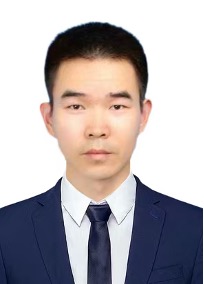
Yongjun Huo

Profile

Yongjun Huo is a tenured Associate Professor and Doctoral Supervisor at the School of Materials Science and Engineering, Beijing Institute of Technology. He serves as Deputy Director of the Department of Materials Processing Engineering, Deputy Director of the Engineering Research Center of High-Reliability Packaging Materials under Extreme Conditions of the Ministry of Education, and Chair of the Interconnection Technology Committee of the International Conference on Electronic Packaging Technology (ICEPT). He has been selected for the Beijing Municipal Science and Technology Nova Program and leads a technology innovation team under the Xingliao Talent Program. To date, he has chaired six national research projects, including General and Young Scientists Fund projects of the National Natural Science Foundation of China, as well as more than ten industry-sponsored collaborative projects.

His research has long focused on electronic packaging technologies. More than 60 high-quality academic papers have been published, including articles in leading journals such as Scripta Materialia. His scholarly output also includes one PCT international patent as first inventor, seven granted Chinese invention patents, one software copyright, and more than twenty patent applications. In addition, he has published one “Double First-Class” textbook and one academic monograph. As primary supervisor, he has guided students to numerous major innovation and entrepreneurship awards, including the Gold Award in the Higher Education Main Track of the 2025 China International College Students’ Innovation Competition, the National Gold Award in the 14th “Challenge Cup” China College Students’ Entrepreneurship Plan Competition, and the Grand Prize in the Main Track of the 2025 “Challenge Cup” Capital University Students’ Extracurricular Academic and Technological Works Competition.

Teaching

1. Electronic Packaging Structure and Design

2. Semiconductor Physics

3. Integrated Training in Electronic Device Assembly

Research Areas

1. High-density low-temperature solid-state interconnection

2. Packaging technologies for wide-bandgap semiconductors

3. Advanced packaging materials

Selected Publications

1. X. Chen, L. Yang, Y. Zhang, D. Zhang, J. Song, J. Feng, X. Zhao, G. Zhang*, and Y. Huo*, “A Comprehensive Model for Spinodal Decomposition in Ag–Cu Alloys Based on Phase-Field Theory and In Situ TEM”, ACS Applied Materials & Interfaces, vol. 17, no. 38, pp. 54263–54281, 2025.

2. C. Cao, M. Yang, C. Liang, D. Zhang, X. Chen, X. Zhao, Chin C. Lee, and Y. Huo*, “A phase-field model of electrochemical migration for silver-based conductive adhesives”, Electrochimica Acta, 471, 143388, 2023.

3. M. Yang, G. Li, Y. Gu*, J. Song, H. Li, X. Zhao, and Y. Huo*, “Liquid metal-based flexible and wearable thermoelectric cooling structure and cooling performance optimization”, Science China Materials, vol. 66, no. 10, pp. 1–11, 2023. (Journal Cover Paper)

4. M. Yang, Y. Liu, D. Zhang, C. Cao, X. Zhao, and Y. Huo*, “Size-Controlled Low-Melting-Point-Alloy Particle-Incorporated Transient Liquid-Phase Epoxy Composite Conductive Adhesive with High Performances”, ACS Applied Polymer Materials, 5(4), 2760–2773, 2023. (Journal Cover Paper)

5. R. Sheikhi, Y. Huo*, F. G. Shi, and C. C. Lee, “Low Temperature VECSEL-to-Diamond Heterogeneous Integration with Ag-In Spinodal Nanostructured Layer”, Scripta Materialia, 194, 113628, 2021.

Meng An

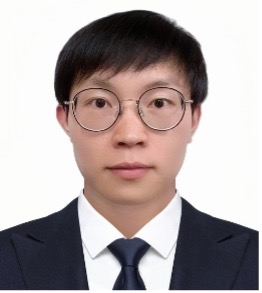
Meng An

Profile

Meng An is a Research Professor and Doctoral Supervisor. He has been selected for several prestigious talent programs, including the National Young Talent Program, the Japan Society for the Promotion of Science (JSPS) Fellowship, the Zhejiang Overseas Young Talent Program, and the Shaanxi Young Science and Technology Rising Star Program. His research primarily focuses on thermal management for chip materials and devices, thermophysical characterization at the micro- and nanoscale, and cross-scale design and mechanistic analysis of the thermo-mechanical properties of composite materials.

In recent years, he has led more than ten research projects, including General Program and Young Scientists Fund projects supported by the National Natural Science Foundation of China. He has published more than 100 SCI-indexed papers in internationally recognized journals such as Nature Communications, Advanced Materials, PNAS, and Nano Letters, with over 4,300 citations, and holds eight authorized invention patents. He currently serves as Associate Editor of Nano Thermal and as a Young Editorial Board Member or Guest Editor for several journals, including Chinese Chemical Letters. He has also served as a proposal reviewer for major funding agencies, including the National Natural Science Foundation of China and Chilean national research funding agencies, and has frequently chaired academic sessions and delivered invited and oral presentations at conferences in China and abroad.

Research Areas

1. Machine learning- and artificial intelligence-driven optimization and design of thermal devices and advanced thermal functional materials

2. Thermophysical characterization at the micro- and nanoscale

3. Development of flexible multi-tactile energy conversion devices and optimization of material performance

4. Cross-scale design and mechanistic analysis of the thermo-mechanical properties of composite materials

Selected Publications

1. Spatially regulated water-heat transport by fluidic diode membrane for efficient solar-powered desalination and electricity generation, Nature Communications, 16(1), 5050, 2025.

2. Reversible bipolar thermopower of ionic thermoelectric polymer composite for cyclic energy generation, Nature Communications, 14(1), 306, 2023.

3. Tailoring P-N conversion in all-solid-state polymer composites with a record ionic thermopower, Nature Communications, 13(1), 1–10, 2022.

4. Tilted crack-engineered photothermal membranes achieve attenuation-free solar evaporation and oil recovery from emulsions, Advanced Materials, 38(4), e15845, 2025.

5. Unlocking the trade-off between intrinsic and interfacial thermal transport of boron nitride nanosheets by surface functionalization for advanced thermal interface materials, Advanced Materials, 37(1), 2412137, 2025.

6. Heat conduction modulation in incommensurate twisted stacking of transition-metal dichalcogenide, Advanced Functional Materials, 2422761, 2025.

7. Anomalous thermal conductivity enhancement in twisted graphene/-BN bilayers revealed by neuroevolution potential driven atomistic simulations, Physical Review B, 113(3), 035426, 2026.

8. Molecularly engineered rigid ultra-micropore membranes for ultrahigh-power osmotic energy harvesting from high-temperature hypersaline brine, Advanced Materials, 37(29), 2505458, 2025.

9. Reconfiguring Zn deposition dynamics via epitaxial Zn2+ pathway in profiled viscose Rayon for long-cyclability Zinc-Ion batteries, Energy & Environmental Science, 18(1), 5457–5469, 2025.

10. 4D-printed dual-functional hydrogels breaking the trade-off between rapid kinetics and ultrahigh water uptake for atmospheric water harvesting, Advanced Materials, 38(10), e16698, 2026.

Miao Jiang

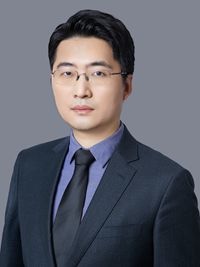
Miao Jiang

Profile

Miao Jiang is a Professor and nationally recognized young overseas high-level talent. He serves as a Doctoral Supervisor at Beijing Institute of Technology and as Deputy Director of the Engineering Research Center of High-Reliability Packaging Materials under Extreme Conditions of the Ministry of Education. He is also a reviewer for national talent programs and the National Natural Science Foundation of China, a Guest Editor of Chinese Physics B, and a reviewer for leading journals such as Advanced Materials and Science Advances.

His research has long centered on electromagnetic functional materials and devices. He has led or participated in a number of major research projects, including one national overseas young talent program, one major instrumentation project supported by the State Administration of Science, Technology and Industry for National Defense, one high-level overseas talent team project, two projects funded by the National Natural Science Foundation of China, and additional national and provincial research programs. With an interdisciplinary background spanning materials science, physical electronics, and electronic engineering, he has made important contributions to high-performance magnetic storage technologies for the big-data era, as well as electromagnetic wave absorption and shielding. His work has been published in high-impact journals, including Nature Electronics, Nature Communications, and Advanced Materials. Students under his supervision have received honors such as Outstanding Graduate of Beijing and Outstanding Undergraduate Thesis of Beijing, and he has been recognized as an Outstanding Supervisor of Undergraduate Thesis in Beijing.

Admissions

The group plans to recruit 2–3 graduate students each year, including master’s students, integrated M.S.–Ph.D. candidates, and Ph.D. students. Applicants with interdisciplinary backgrounds in materials science, physics, electronics, and information science are particularly encouraged to apply. Opportunities for international academic exchange may be available depending on research progress.

Priority will be given to doctoral applicants with experience in magnetic material synthesis, micro/nanodevice fabrication, magnetic or electrical characterization, or the design and preparation of advanced microwave-absorbing materials. Motivated students interested in pursuing exciting and impactful research are warmly welcome to join.

Research Areas

Electromagnetic functional materials and devices, spintronic materials and devices, electromagnetic wave absorption and shielding.

Selected Publications

1. M. Jiang*, H. Asahara, S. Sato, et al., Suppression of the field-like torque for efficient magnetization switching in a spin-orbit ferromagnet. Nature Electronics, 3, 751–756, 2020.

2. M. Jiang*, H. Asahara, S. Sato, et al., Efficient full spin-orbit torque switching in a single layer of a perpendicularly magnetized single-crystalline ferromagnet. Nature Communications, 10, 2590, 2019.

3. M. Jiang*, H. Asahara, S. Sato, et al., Electric field control of spin-orbit torque magnetization switching in a spin-orbit ferromagnet single layer. Advanced Science, 10, 2301540, 2023.

4. M. Jiang*, X. Yang, S. Qu, et al., Field-free spin-orbit torque magnetization switching in a perpendicularly magnetized semiconductor (Ga,Mn)As single layer. ACS Applied Materials & Interfaces, 16, 23497–23504, 2024.

5. M. Jiang*, X. Yang, Y. Yu, et al., Micromagnetic simulations for magnetic-field-free magnetization switching by spin-orbit torque in a perpendicularly magnetized (Ga,Mn)As single layer. APL Materials, 13, 041106, 2025.

6. Z. Han, Y. Huo, … , M. Jiang*, Unveiling the potential of spin–orbit torque in a magnetic single layer for advancing spintronics application. Applied Physics Reviews, 13, 011305, 2026.

7. Z. Han, Y. Huo, … , M. Jiang*, Room-temperature spin-orbit torque in an epitaxial half-Heusler alloy NiMnSb single layer on an MgO (100) substrate. Physical Review Applied, 24(6), 064010, 2025.

8. L. Li, M. Zhang, M. Jiang*, et al., High entropy ceramics for electromagnetic functional materials. Advanced Functional Materials, 35(10), 2416673, 2024.

9. X. Liu, L. Li, … , M. Jiang*, A lightweight Co1Ni0.5@NC/SiCf filler with excellent low-frequency electromagnetic wave absorption and heat dissipation for electronic packaging. Chemical Engineering Journal, 525(1), 170604, 2025.

10. Y. Li, J. Bai, … , M. Jiang*, Lightweight carbonyl iron powder-based yolk-shell architectures for integrated electromagnetic wave absorption and thermal protection. Carbon, 246, 120959, 2025.

Chunbao Du

Chunbao Du

Profile

Chunbao Du is an Associate Professor whose research focuses on the controlled synthesis of functional materials and their applications in thermal management. He has led and completed projects funded by the National Natural Science Foundation of China, the Shaanxi Provincial Department of Science and Technology, the Shaanxi Provincial Department of Education, and the PetroChina Engineering Technology Research Institute. He has published more than 50 academic papers, authored one monograph in Chinese and one chapter in an English-language academic volume, and holds two authorized patents.

Wentao Chen

Wentao Chen

Profile

Wentao Chen is an academic talent at the Yangtze Delta Region Academy (Jiaxing), Beijing Institute of Technology, and a recipient of the Zhejiang Provincial Talent Introduction Program for Young Scholars. He currently serves as Executive Director of the Thermal Management Branch for Micro/Nano Systems of the Chinese Society of Micro/Nano Technology.

His research focuses on extreme near-field phonon heat transport and heat-transfer mechanisms at solid–liquid interfaces on the micro- and nanoscale. Related work has been published, as first author or co-first author, in internationally recognized journals such as Small Science, Nanoscale, and the International Journal of Heat and Mass Transfer. He has received the Excellent Publication and Research Award from the Japan Society of Heat Transfer, as well as the High-Level Oral Presentation Award and the Young Talents Invited Oral Presenter distinction at the 3rd World Materials Conference. He has also led and completed projects funded by the Japan Society for the Promotion of Science (JSPS) and the Sakura Science Program of the Japan Science and Technology Agency (JST).

Research Areas

1. Extreme near-field heat transfer across van der Waals gaps

2. Mechanisms of solid–liquid interfacial thermal transport at the micro- and nanoscale

3. Intermolecular energy transport and thermal regulation at interfaces

4. Electric-field-driven thermal transport at nanoscale interfaces